
Para além de uma resposta capaz ao programa proposto e às circunstâncias da envolvente imediata, o projeto para o Mercado dos Olivais pretende agregar, através de opções de desenho cirúrgicas, as possibilidades de uso e as oportunidades urbanas que esta construção pode gerar para além da sua mera função.
Este espaço de mercado procura, portanto, criar uma solução de compra de frescos eficiente, com uma experiência arquitetónica altamente qualificada, mas também servir de agregador social, capaz de mobilizar a população mesmo fora do horário de funcionamento do mercado.
O seu desenho, embora totalmente motivado pelo programa a que dá resposta, permite também uma utilização extremamente flexível e diversificada para programas culturais e eventos, abrindo portas a uma miríade de combinações de espaços de exposição, palco e plateia, em várias escalas diferentes.
Finalmente, toma-se a oportunidade de propor (fora do âmbito do concurso e garantindo que o Mercado não depende desta proposta para o seu funcionamento, sendo uma solução de mercado totalmente eficaz mesmo na sua ausência) uma ligação pedonal entre a Rua Cidade de Nampula e o Parque Vale do Silêncio.
In addition to providing an effective response to the proposed program and the surrounding context, the project for the Olivais Market aims to incorporate, through precise design choices, the potential uses and urban opportunities that this structure can generate beyond its primary function.
This market space seeks to offer an efficient solution for purchasing fresh produce, with a high-quality architectural experience, while also serving as a social hub, capable of attracting the community even outside market hours.
Its design, though fully motivated by the market’s purpose, allows for an extremely flexible and diverse use for cultural programs and events, enabling various combinations of exhibition spaces, stages, and audiences on different scales.
Finally, there is an opportunity to propose (outside the scope of the competition and ensuring that the market’s operation does not depend on this proposal, remaining fully functional even without it) a pedestrian connection between Cidade de Nampula street and Vale do Silêncio park.
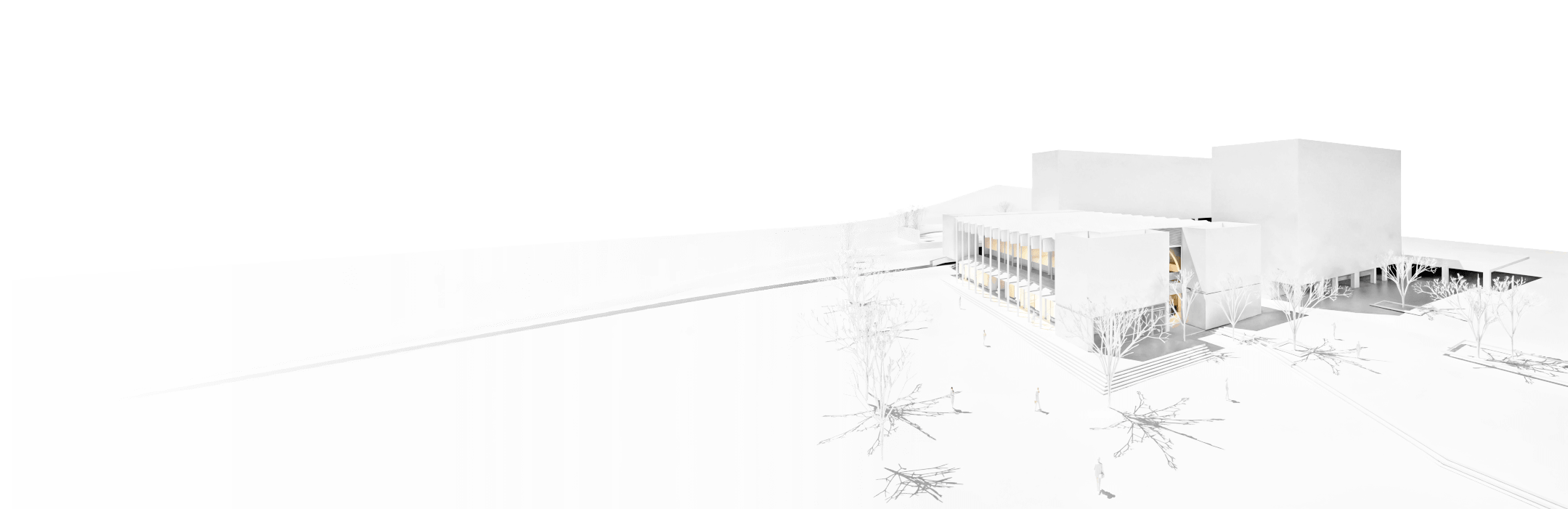
Esta proposta procura maximizar os potenciais identificados na sua envolvente, valorizar qualidades latentes que possam ser exploradas de forma positiva para o Mercado e para o tecido urbano presente, e tenta resolver necessidades prementes que possam obter resposta através de operações pertinentes para este projeto.
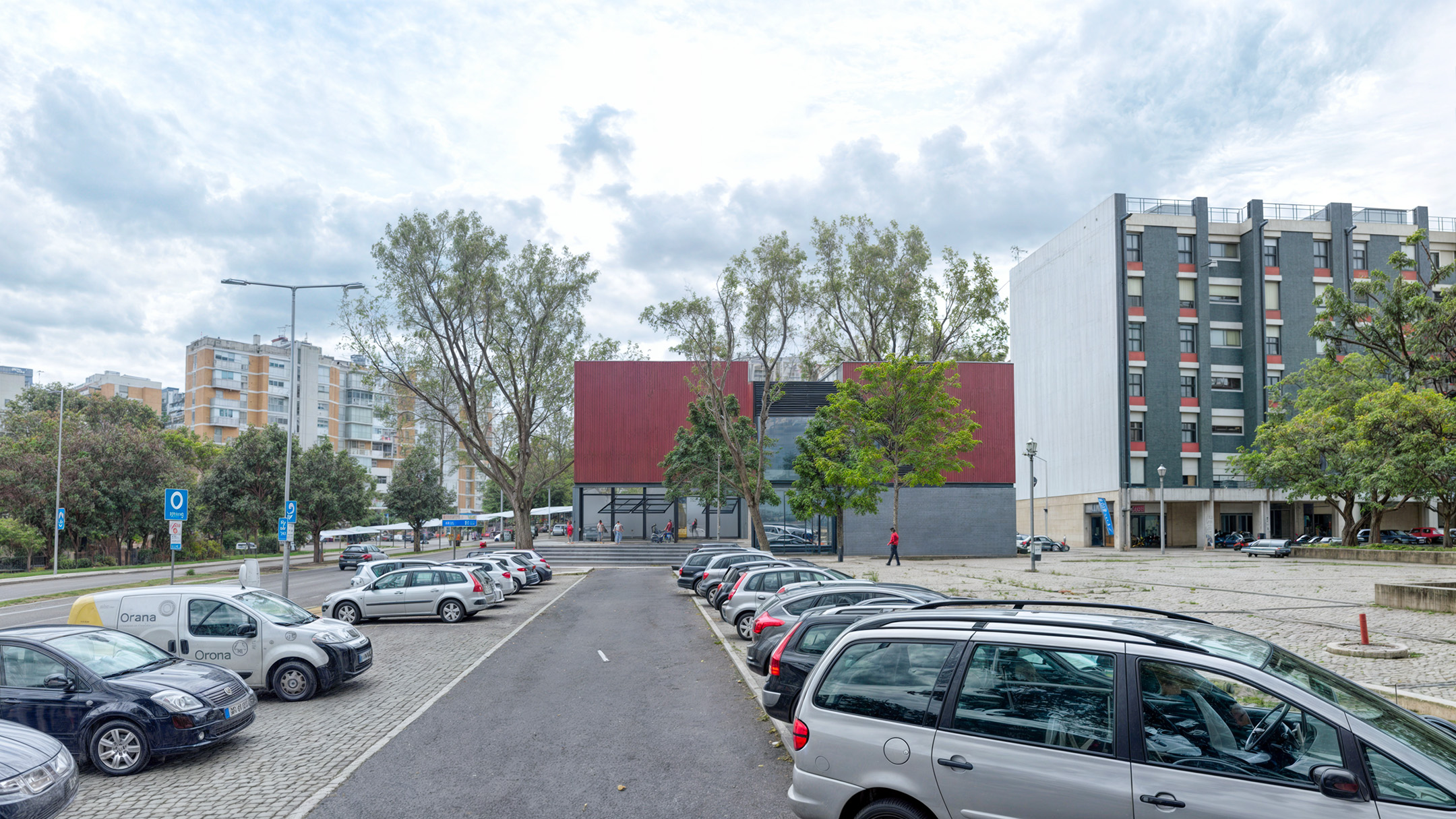
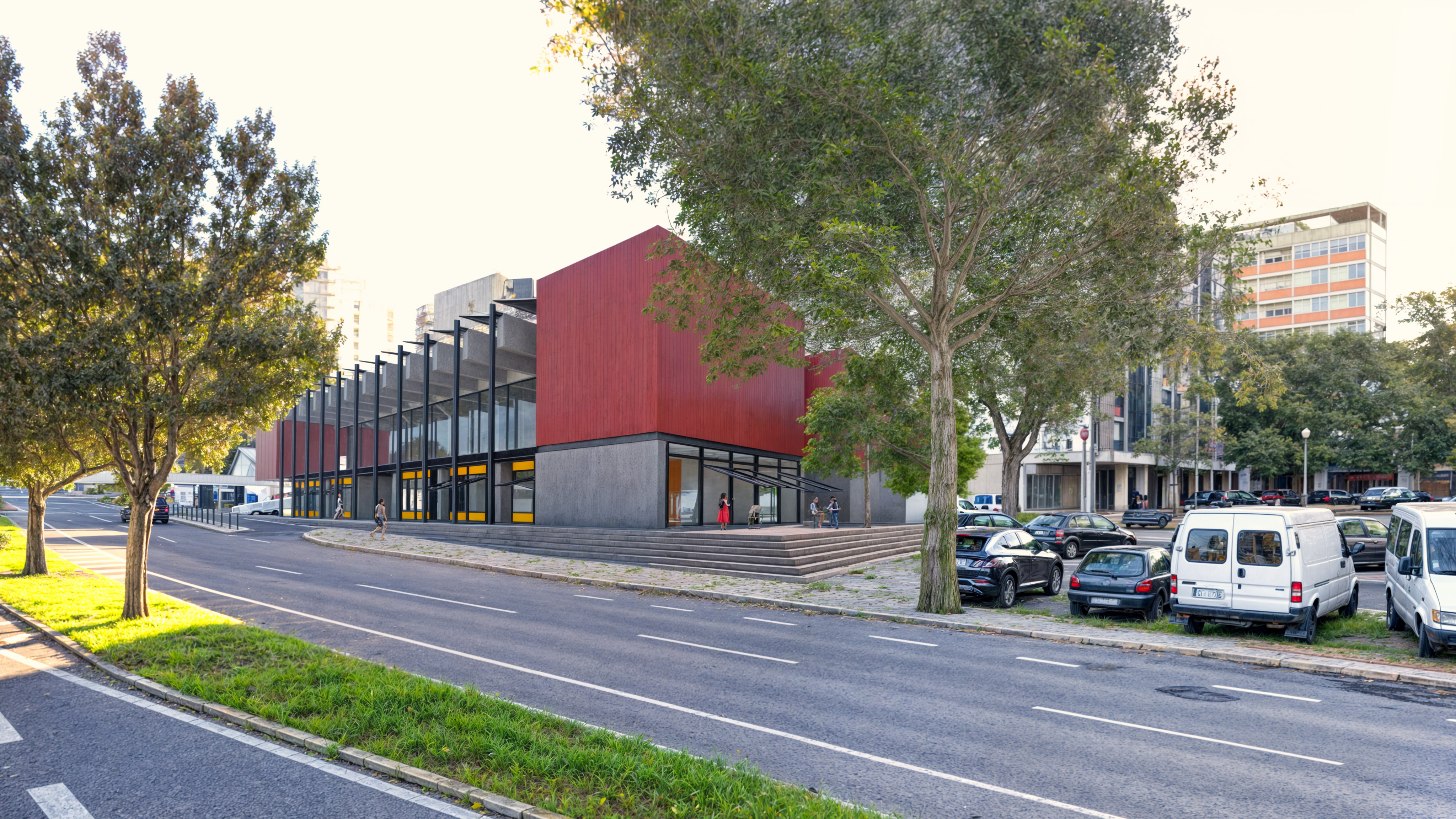
A “Praceta B”, localizada a norte do espaço de intervenção, constitui a “sala” que enquadra a entrada principal do mercado, constituindo uma transição entre o espaço público da cidade e o espaço público do interior do mercado. É neste ponto que colocamos a cafetaria, sendo o intermediário ideal entre as duas realidades, prolongando para o exterior o espaço do mercado e convidando a ideia de que o Mercado é, não só, um lugar de passagem mas também um lugar de estar.
Redesenha-se a ligação ao parque de estacionamento da PSP como uma via condicionada sobre o espaço pedonal, garantindo uma ligação menos disruptiva, partilhada com as necessidades de carga e descarga e de recolha de lixo.
As galerias comerciais dos prédios preexistentes a Poente ligam-se à entrada principal do Mercado e ao seu eixo de circulações transversal com o redesenho dos arranjos exteriores.
Recorrendo a tramos preexistentes combinados com uma nova ligação aérea, propomos também a criação de uma conexão pedonal entre a Rua Cidade de Nampula e o Parque Vale do Silêncio, resolvendo diferenças de cotas e criando um circuito entre o Parque e uma área significativa da cidade com uma alta densidade de habitantes, circuito esse que, sem dependência automóvel, alimentará, de forma complementar, o mercado de forma direta.
This proposal seeks to maximize the potential identified in its surroundings, enhance latent qualities that can be positively exploited for the market and the urban fabric, and address urgent needs through relevant operations for this project.
“Plaza B,” located north of the intervention space, forms the “living room” that frames the main entrance of the market, acting as a transition between the city’s public space and the market’s public interior space. Here, we place the café, an ideal intermediary between both realities, extending the market’s space outward and inviting the idea that the market is not only a place of transit but also a place to stay.
The connection to the Police parking lot is redesigned as a conditioned path over the pedestrian area, ensuring a less disruptive link shared with loading/unloading and waste collection needs.
The commercial galleries of the pre-existing buildings to the west are connected to the main entrance of the market and its transverse circulation axis through the redesign of the external arrangements.
Using pre-existing sections combined with a new aerial connection, we also propose creating a pedestrian link between Cidade de Nampula street and Vale do Silêncio park. This resolves elevation differences and creates a circuit between the park and a significant area of the city with a high population density. This circuit, without relying on cars, will complement and directly feed into the market.

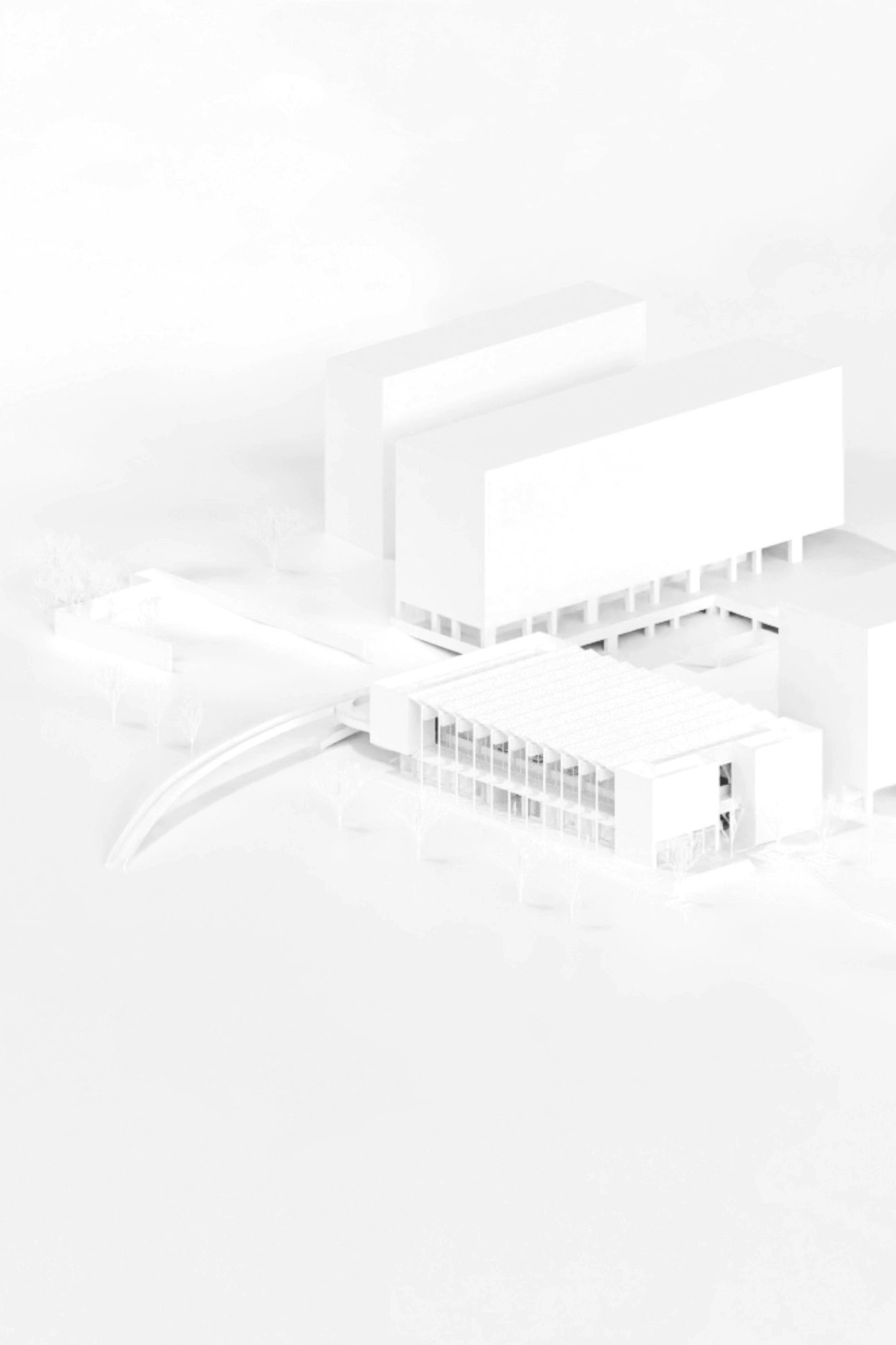
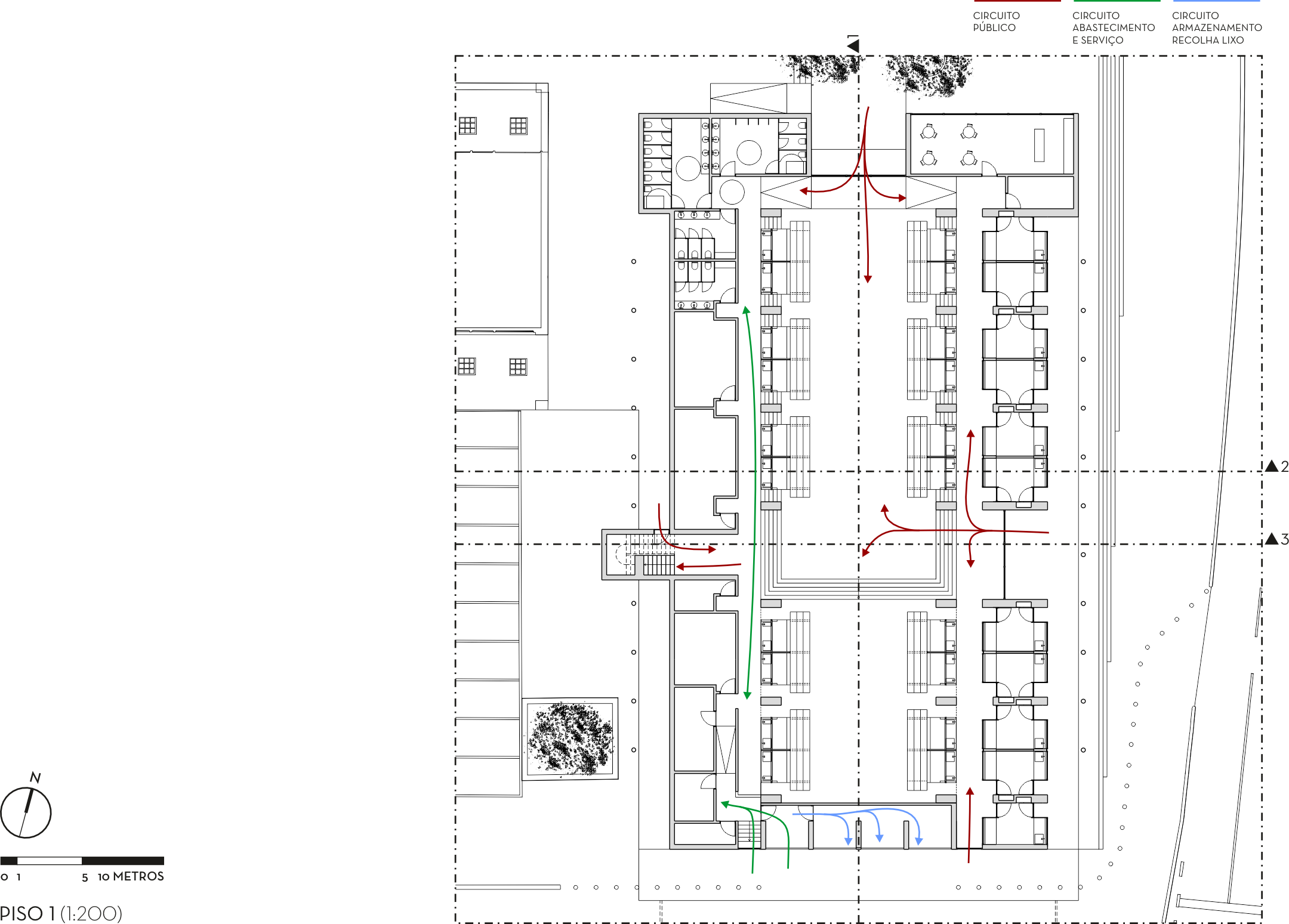
Procurou-se a integração dos espaços exteriores existentes com a proposta através de intervenções mínimas na envolvente, redesenhando a Praceta a Norte de forma a integrar o acesso principal ao Mercado. Qualificou-se e pedonalizou-se a envolvente imediata do equipamento, propondo-se um novo traçado para o acesso ao parque da PSP, em zona pedonal, delimitado por pilaretes de segurança e controlando acesso ao parque mas, também, às zonas de carga e descarga e à recolha de lixo, por pilarete eletromecânico automático.
Esta nova ligação redesenha o espaço público a Sul do Mercado e a superfície do parque exterior da PSP.
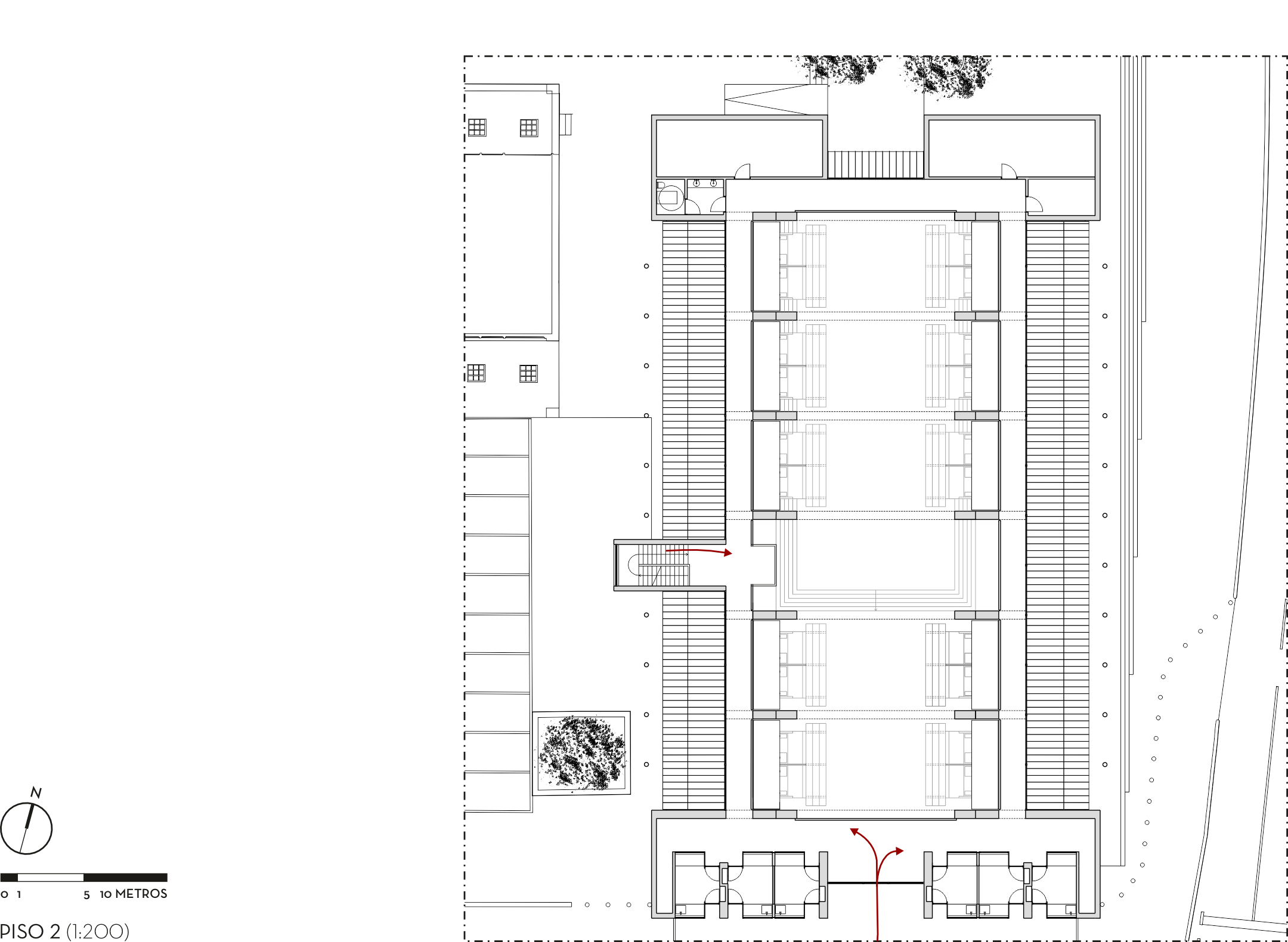
A conexão pedonal proposta entre a Rua Cidade de Nampula e o Parque Vale do Silêncio resolve as diferenças de cotas do bairro, num circuito integralmente acessível que desenha uma entrada superior ao Mercado, à cota do programa administrativo. Este piso liga-se ao rés-do-chão do Mercado tanto por uma caixa de escadas como por um elevador.
O Mercado é acessível pela sua entrada principal a Norte, por uma entrada secundária lateral a Nascente, por entradas de serviço e complementares a Sul e Poente, e por uma potencial entrada superior a Sul (através da ponte aérea proposta).
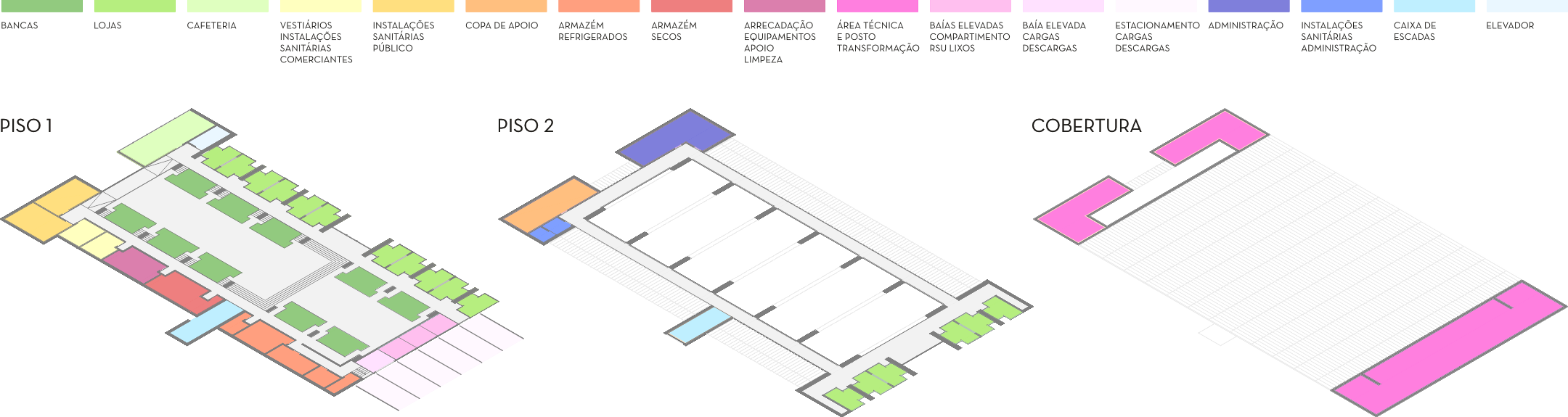
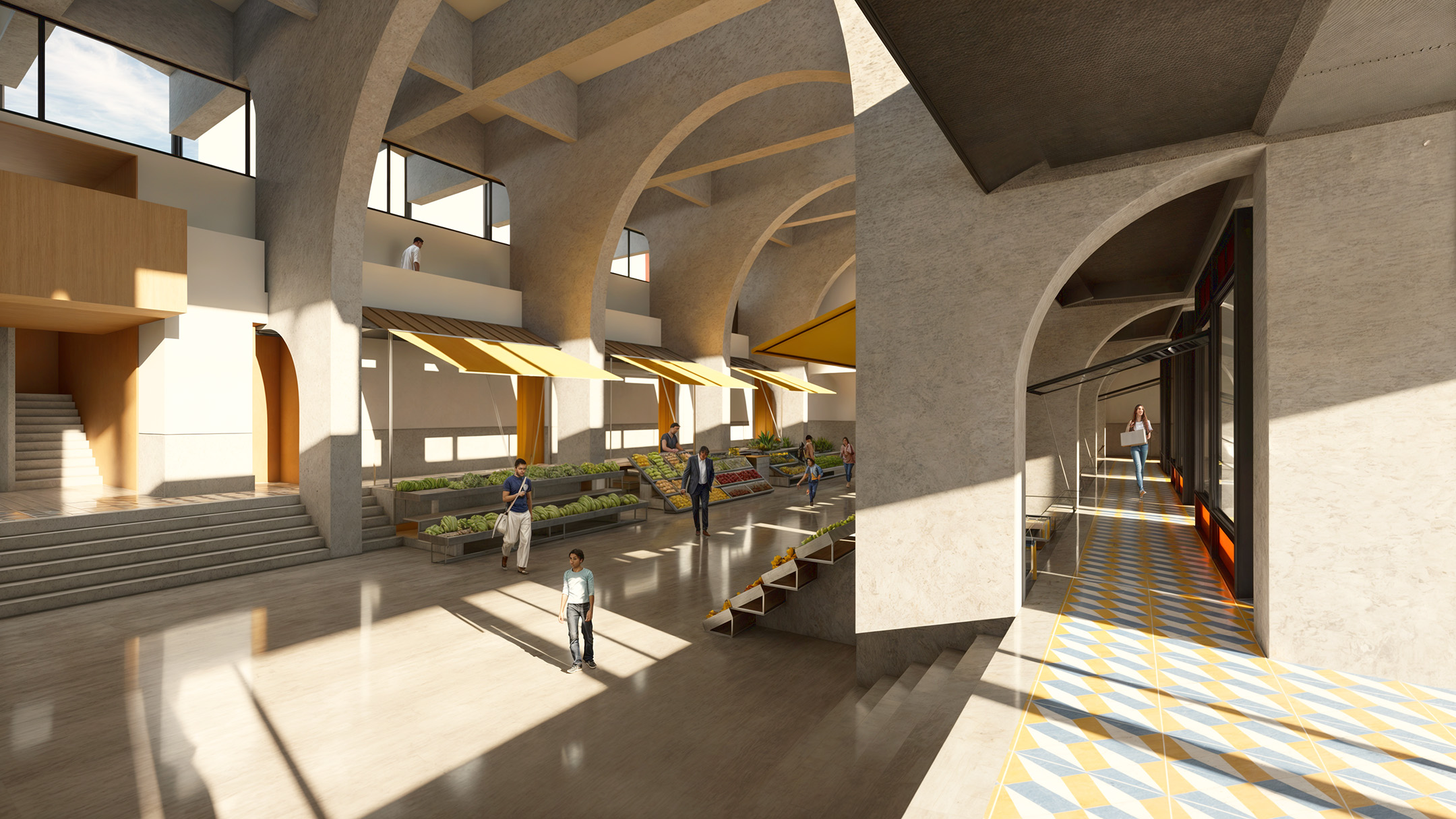
O mercado resolve, no seu interior, a diferença de cotas de cerca de um metro entre os extremos norte e sul da implantação, permitindo entradas de nível em ambos os extremos. As lojas apresentam-se à cota superior (de nível com o terreno a Sul) num sistema que percorre todo o perímetro do Mercado e inclui a zona de peixaria e a entrada secundária. Com os produtos hortofrutícolas na cota inferior (de nível com a Praceta a Norte e a entrada principal), rampas ligam, pelo interior, as duas cotas do programa de mercado, e oferecem-se instalações sanitárias acessíveis.
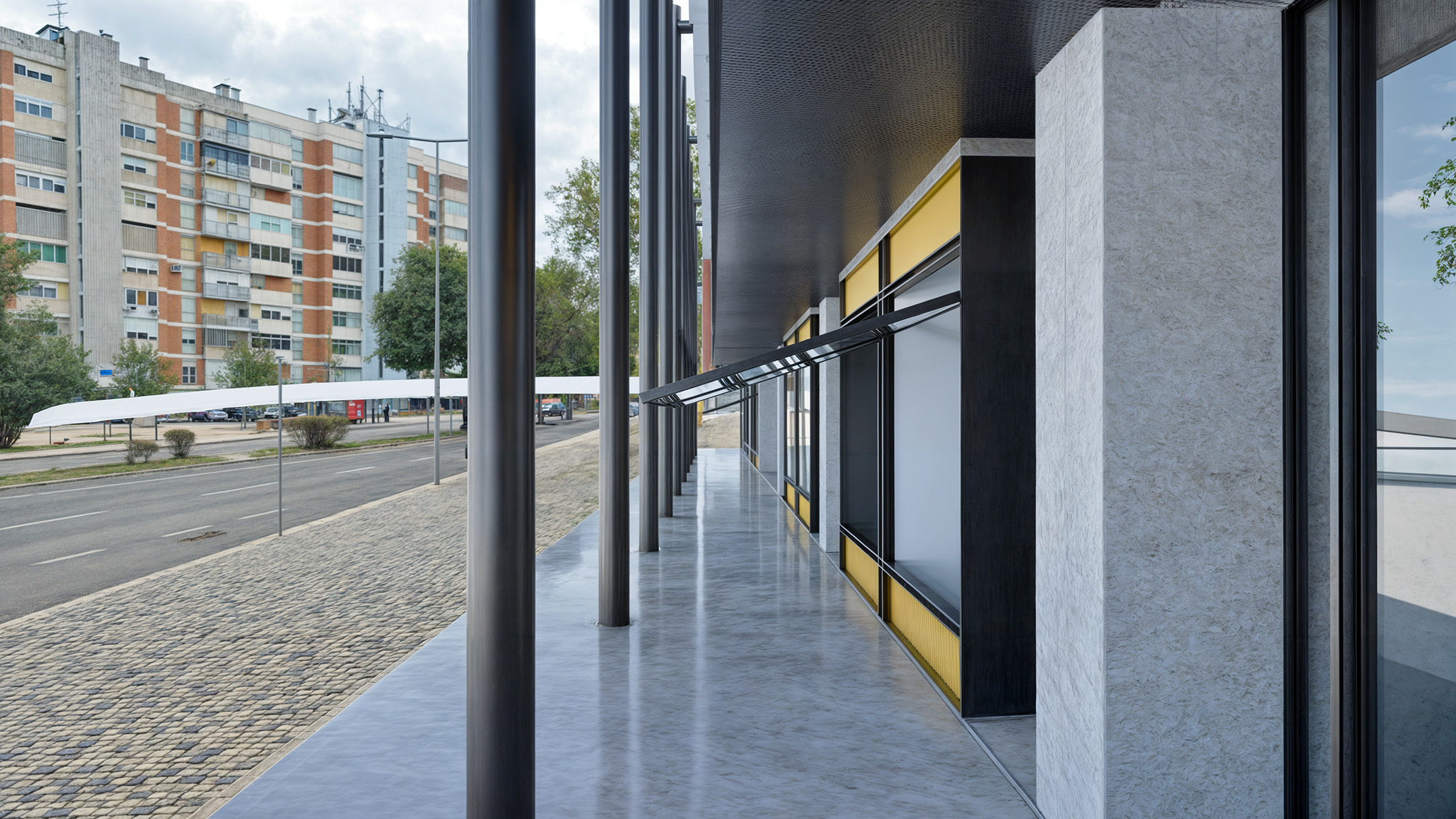
Ao mesmo tempo, a construção desenvolve-se sobre um plinto de nível que garante acesso às lojas no piso térreo sem recurso a rampas ou degraus, à entrada lateral do Mercado e à cafetaria, que constitui o culminar do percurso pela galeria lateral exterior.
The integration of existing outdoor spaces with the proposal was sought through minimal interventions in the surrounding area, redesigning the northern square to integrate the main entrance to the market. The immediate surroundings were pedestrianized, and a new route for access to the Police parking lot was proposed, within a pedestrian zone, delimited by security bollards. This controls access to the parking area, as well as the loading/unloading zones and waste collection areas, via an automatic electromechanical bollard.
This new link redesigns the public space south of the market and the surface of the external Police parking lot.
The proposed pedestrian connection between Cidade de Nampula street and Vale do Silêncio park addresses the differences in levels within the neighborhood, creating a fully accessible circuit that provides an upper entry to the market, at the level of the administrative area. This floor connects to the ground floor of the market through both a staircase and an elevator.
The market is accessible through its main entrance to the north, a secondary side entrance to the east, service and supplementary entrances to the south and west, and a potential upper entrance to the south (via the proposed aerial bridge).
Inside the market, the approximately one-meter difference in levels between the northern and southern ends of the site is addressed, allowing for level access at both ends. The shops are located at the upper level (aligned with the southern terrain) in a system that runs around the entire perimeter of the market and includes the fish market and secondary entrance. The fruit and vegetable section is located on the lower level (aligned with the northern square and the main entrance). Ramps inside the market connect these two levels, and accessible restrooms are provided.
At the same time, the building is developed on a level plinth that ensures access to the ground-floor shops without the need for ramps or steps, providing access to the side entrance of the market and to the café, which marks the end of the exterior side gallery.
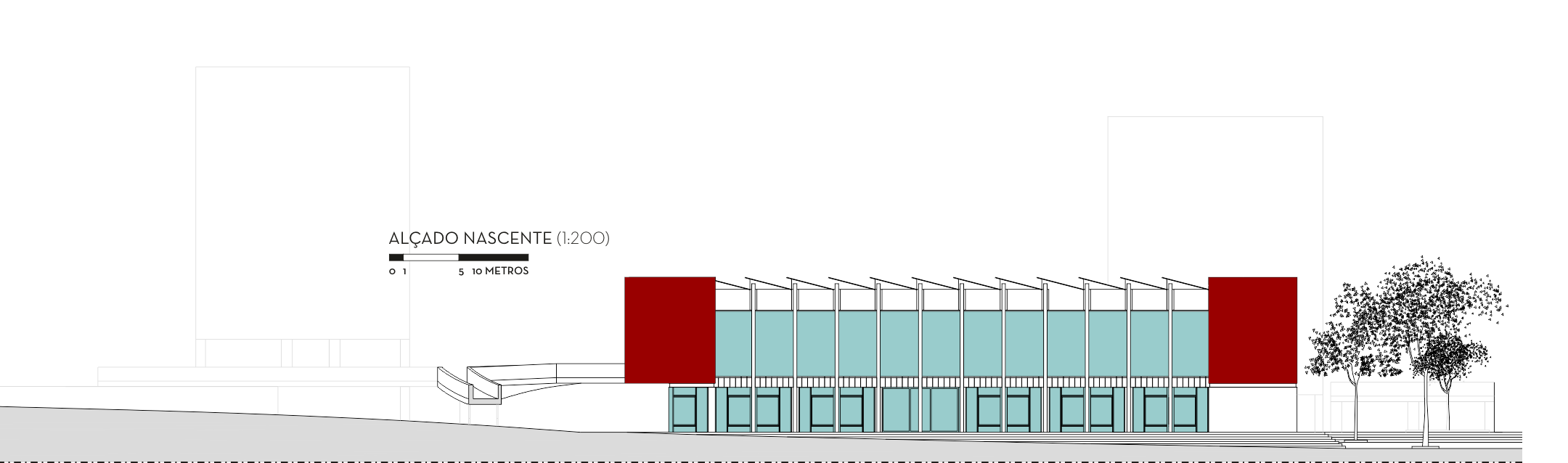
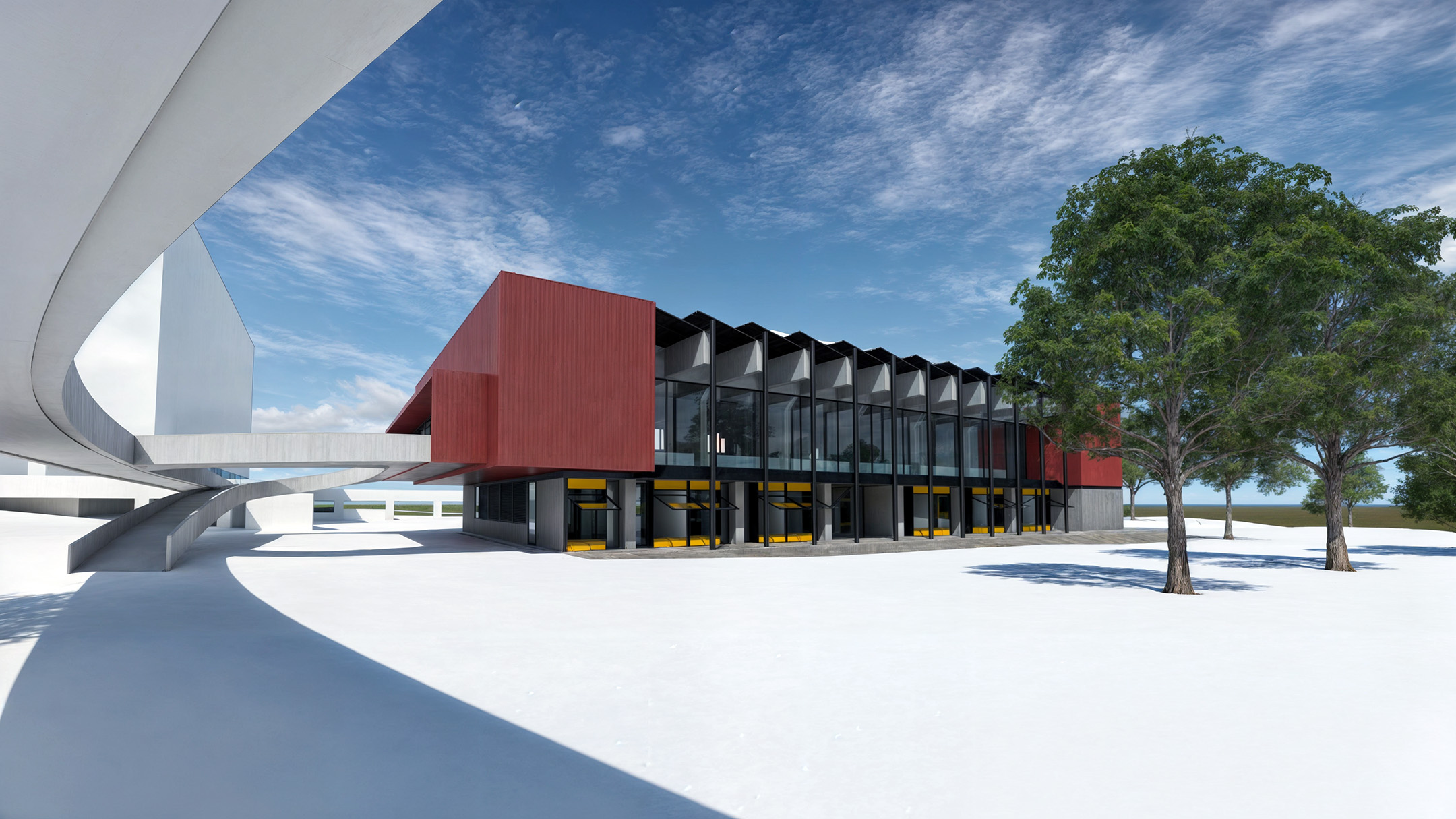
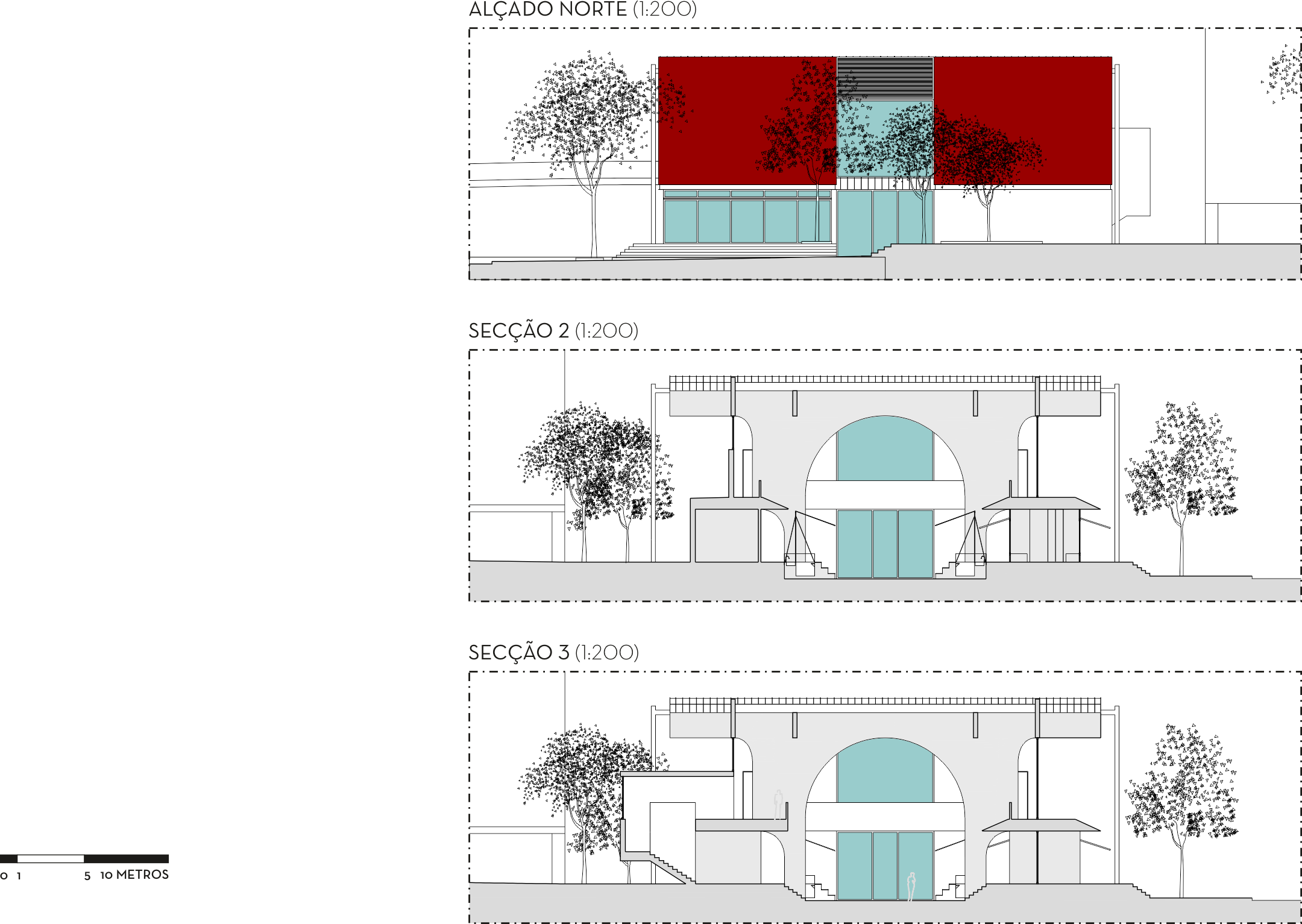
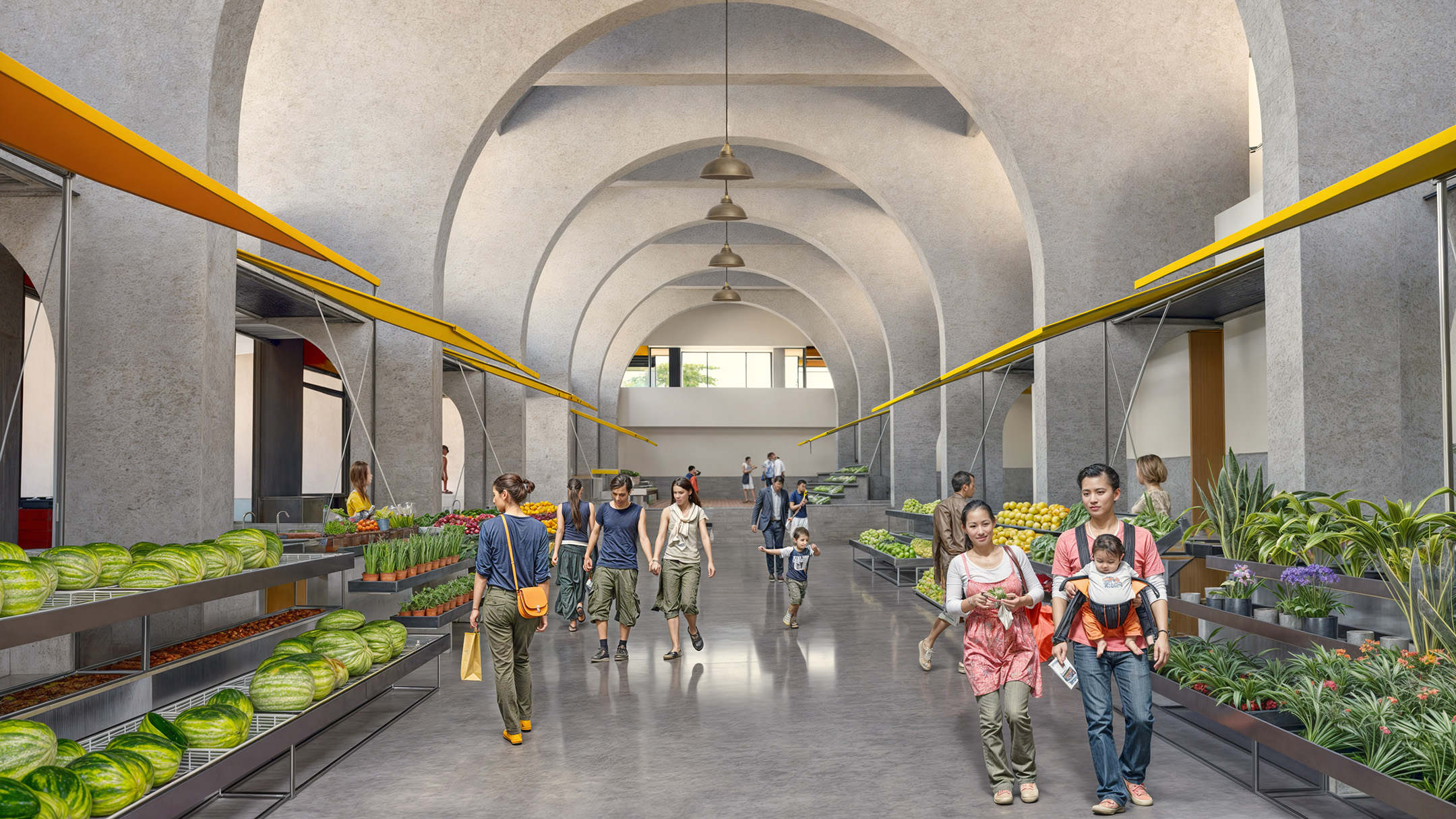
A solução desta proposta é tipologicamente elementar, genuína, parte da memória coletiva partilhada, e testada pelo tempo. Uma grande nave central organiza os espaços de bancas, com uma escala monumental que convida a entrada e a permanência no local, enquadrada por duas galerias laterais a uma cota superior, de escala mais humana, que servem as lojas e resolvem uma circulação periférica.
Estruturalmente a sua composição é simples, com a repetição regular de um plano estrutural em arco, elaborado em betão armado, que suporta a cobertura e as galerias laterais.
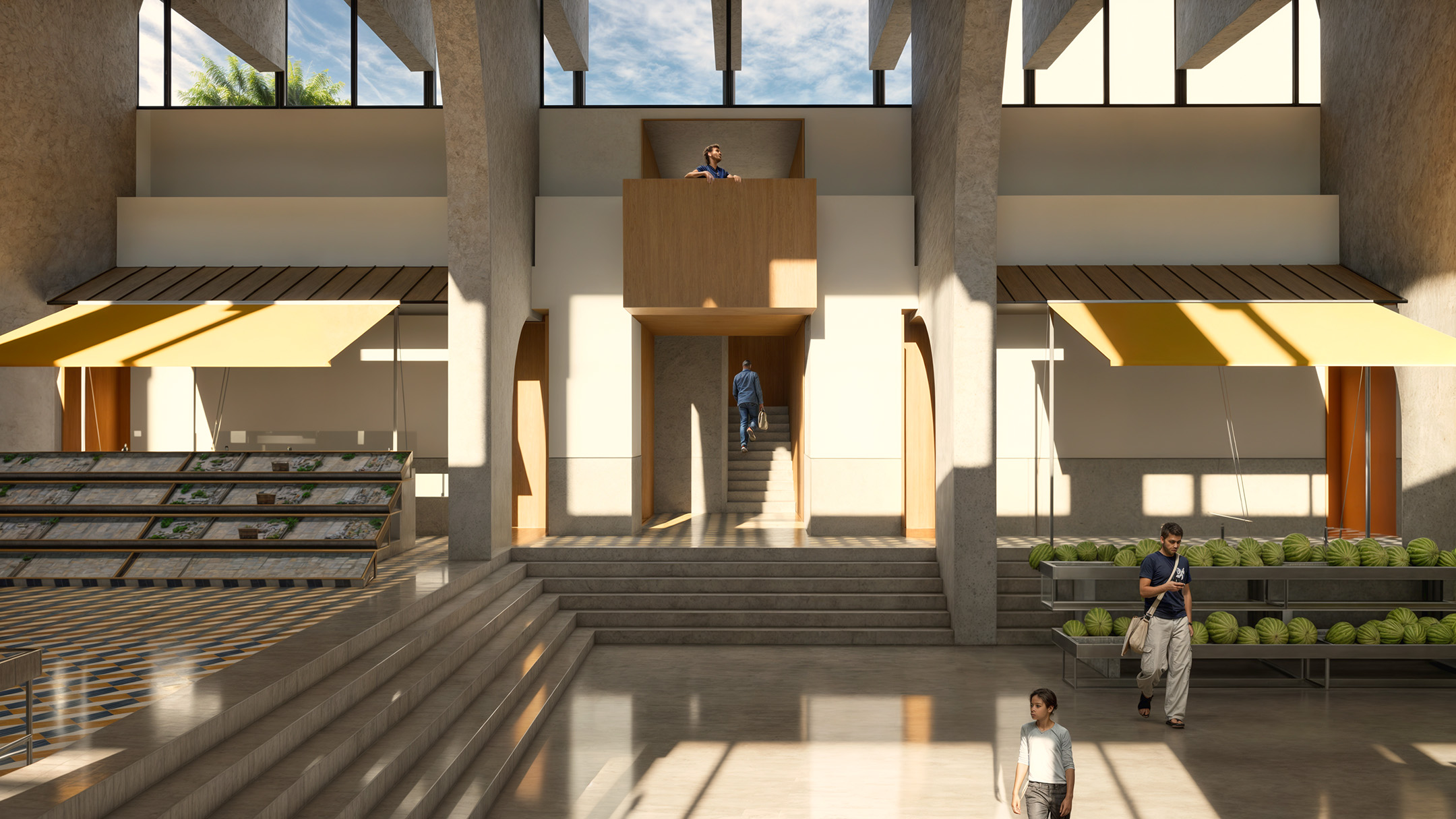
Com uma entrada principal, a eixo, na fachada Norte, e uma entrada secundária a Este (a que também se associam as circulações verticais), é no cruzamento entre ambos os movimentos que se desenha um espaço de desafogo que constitui a “praça” interior do mercado e que separa as bancas de peixe, a uma cota superior, das bancas hortofrutícolas a uma cota inferior.
De forma a libertar o piso térreo para o programa de mercado e demais programas complementares dessa função, propõe-se a área administrativa num segundo piso sobre a entrada Norte, comprimindo a transição entre exterior e interior e valorizando o pé-direito generoso da nave central. Este programa é servido por galerias laterais elevadas e pode potencialmente ser acedido por uma entrada elevada a Sul, a partir da possível ponte pedonal aérea proposta.
Desenham-se algumas lojas a essa cota, voltadas para a ponte pedonal, procurando transformá-la numa rua elevada e criando um polo de atração que mobilize essa circulação para o mercado.
The solution proposed is typologically simple and genuine, rooted in shared collective memory and tested by time. A large central hall organizes the market stalls with a monumental scale that invites entry and encourages lingering, framed by two side galleries at a higher level, which have a more human scale, serving the shops and facilitating peripheral circulation.
Structurally, its composition is simple, featuring the regular repetition of an arched structural plan made of reinforced concrete, which supports the roof and the side galleries.
With a main entrance aligned on the north facade and a secondary entrance to the east (which also connects to the vertical circulation), it is at the intersection of both movements that an open space is designed, constituting the market’s “interior square,” which separates the fish stalls at a higher level from the fruit and vegetable stalls at a lower level.
To free the ground floor for the market program and other complementary functions, the administrative area is proposed on a second floor above the northern entrance, compressing the transition between exterior and interior and enhancing the generous ceiling height of the central hall. This area is served by elevated side galleries and could potentially be accessed by an elevated southern entrance from the proposed aerial pedestrian bridge.
Some shops are designed at this level, facing the pedestrian bridge, aiming to transform it into an elevated street and creating a focal point that draws circulation towards the market.
O ponto de partida para a abordagem programática foi o de encontrar o melhor compromisso de desenho para o programa do Mercado, garantindo uma experiência arquitetónica de qualidade capaz de convidar e de cristalizar o uso diário do equipamento por parte da população circundante.
Para esse fim, foram várias as estratégias colocadas em prática: propôs-se um jogo entre a escala humana e a escala monumental que permita criar situações de grande conforto mas também de deslumbramento; a nave central, numa conta um metro inferior à das galerias laterais, cria um espaço de convergência e de acolhimento; sobre a nave central, a cobertura transforma a luz direta em luz difusa, criando um “céu” iluminado sem que cheguem raios solares ao piso; a zona de peixe é separada da zona hortofrutícola por uma diferença de cotas que, sendo eficaz no que diz respeito à perceção dos espaços, não inibe a leitura da grande nave central como uma só; diferentes tipos de revestimento do piso comunicam, também, diferentes escalas e diferentes usos, com um ladrilho das galerias, lojas e zona de peixes garantindo a escala humana e a perceção da higiene destes espaços.
Ao mesmo tempo, o módulo das bancas parte de uma base comum, sobre a qual se colocam caixas de aço inoxidável, desenhadas em várias variações de capacidades e ângulos de apresentação, de acordo com usos potenciais diferentes, mas que podem ser combinadas e recombinadas de forma simples de maneira a que cada vendedor possa configurar a sua banca de uma forma altamente personalizada. Os vários desenhos de caixa, simultaneamente, são dimensionados para receber tabuleiros de plástico standard, garantindo a melhor apresentação possível para os produtos de forma extremamente simples.
The starting point for the programmatic approach was to find the best design compromise for the market program, ensuring a high-quality architectural experience that invites and encourages daily use by the surrounding population.
To achieve this, various strategies were implemented: a play between human scale and monumental scale was proposed to create situations of great comfort and awe; the central hall, one meter lower than the side galleries, creates a space for convergence and welcome; above the central hall, the roof transforms direct light into diffuse light, creating an illuminated “sky” while preventing sunlight from reaching the floor; the fish area is separated from the fruit and vegetable area by a difference in levels, which, while effective in terms of spatial perception, does not inhibit the reading of the central hall as a unified space; different types of flooring also communicate different scales and uses, with tiles in the galleries, shops, and fish area ensuring a human scale and perception of cleanliness.
At the same time, the stall module is based on a common base, upon which stainless steel boxes are placed, designed in various capacities and presentation angles according to different potential uses, but which can be easily combined and recombined, allowing each vendor to configure their stall in a highly personalized way. The various box designs are also dimensioned to accommodate standard plastic trays, ensuring the best possible presentation of the products in an extremely simple manner.

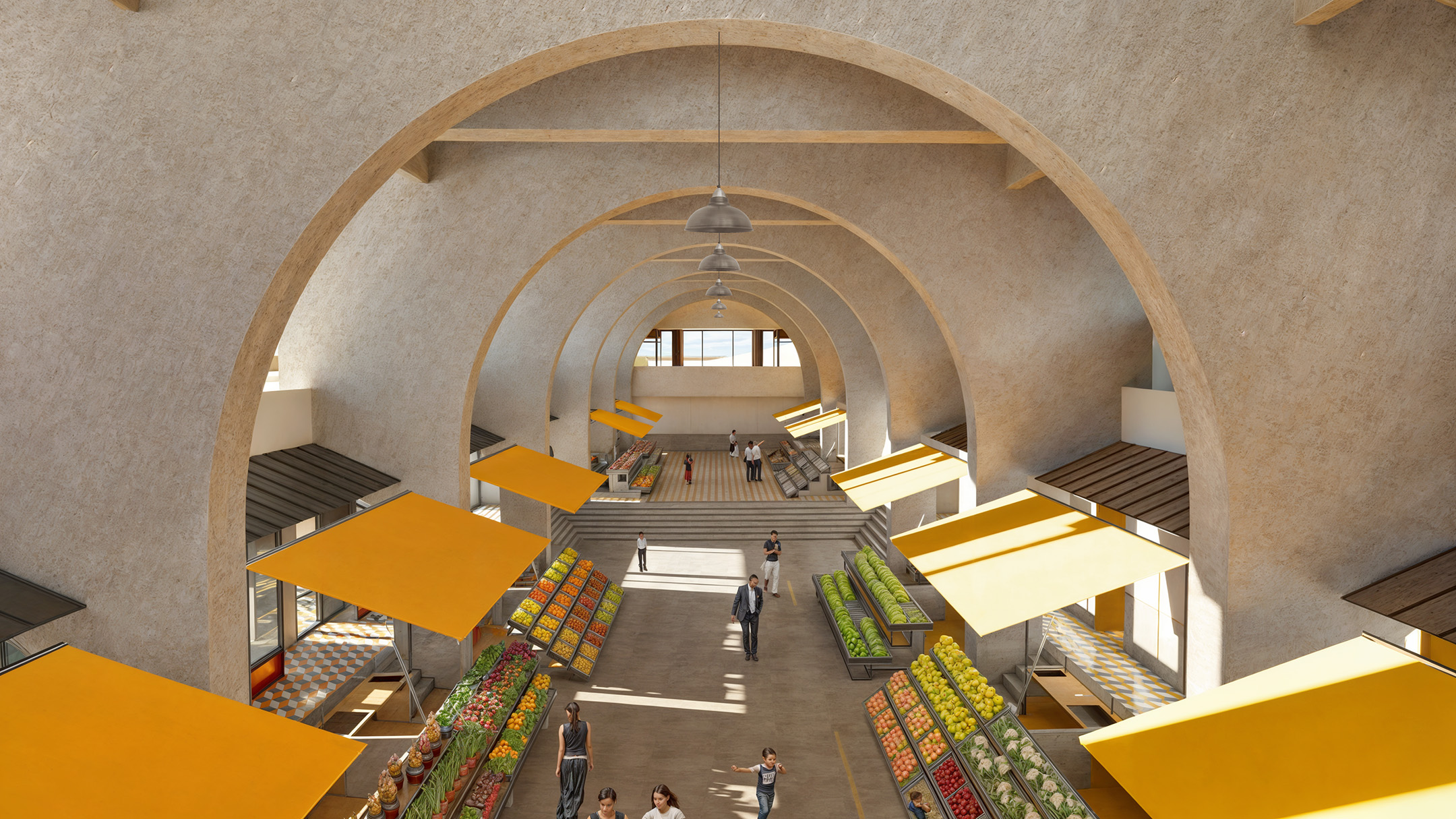

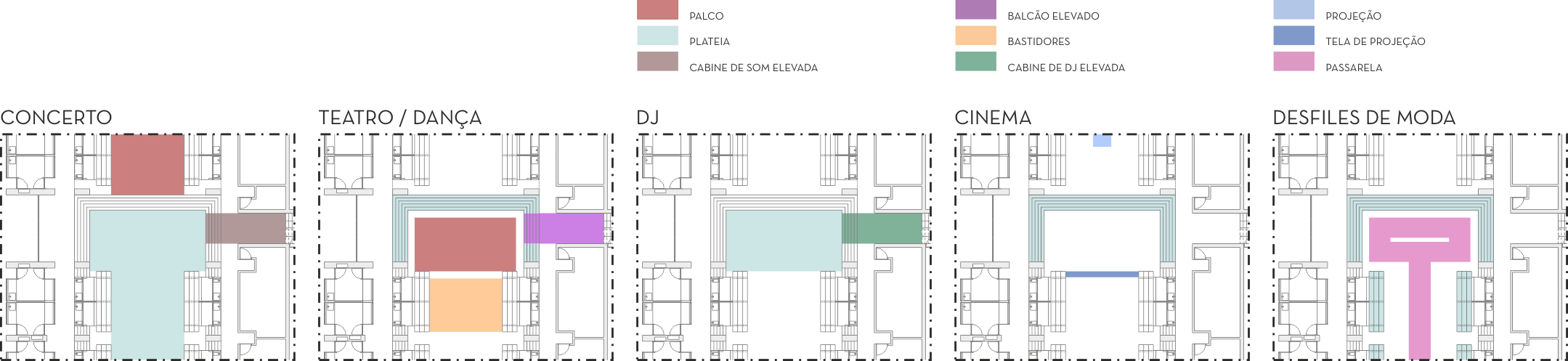
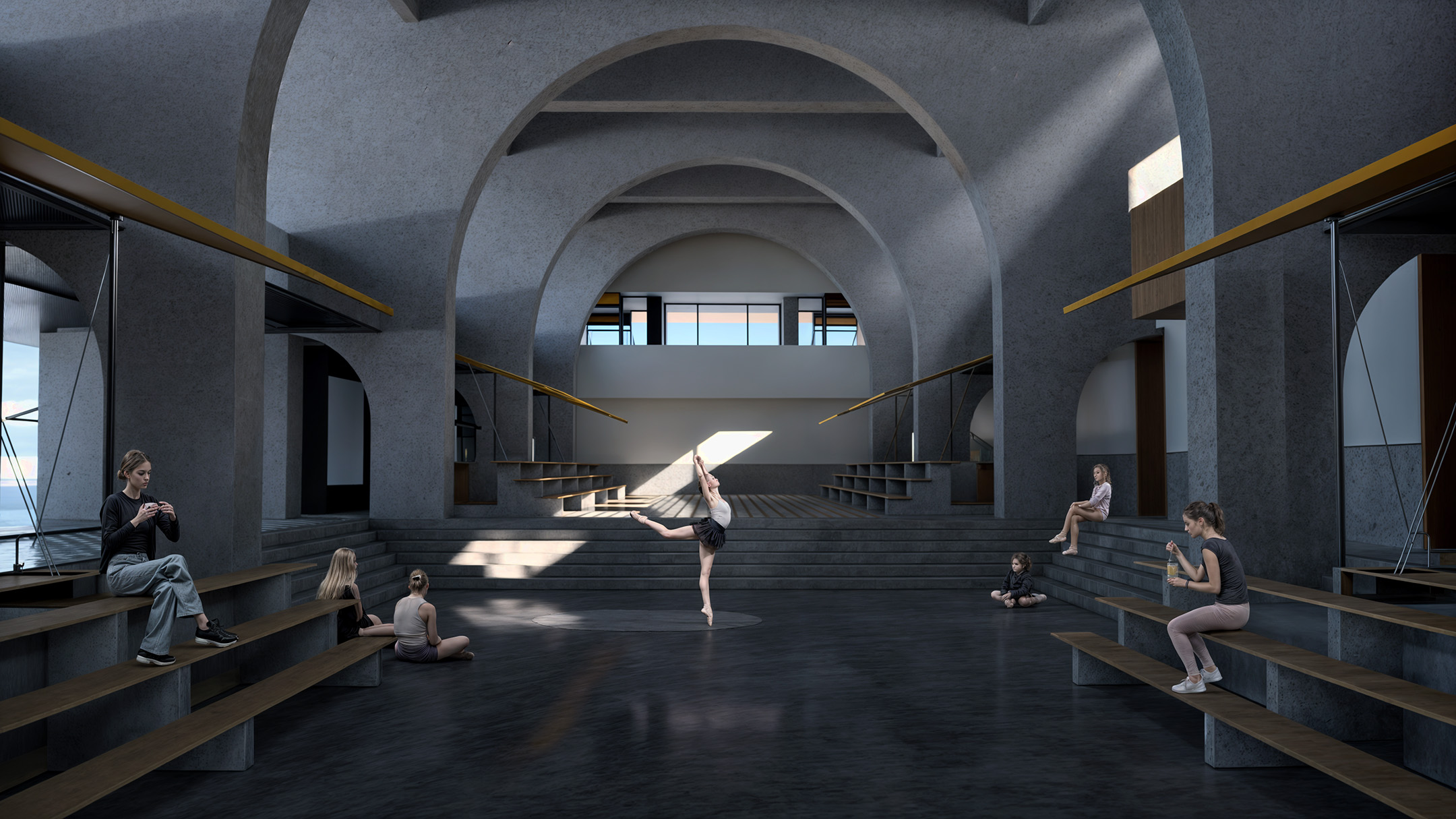
Embora o desenho geral do Mercado tenha sido motivado pela melhor resposta possível ao programa de venda de produtos frescos, esteve sempre presente que o desenho dessa resposta devia adequar-se também a outros usos, com particular ênfase em utilizações culturais fora das horas de funcionamento do programa de frescos.
Dessa forma, muitos dos dispositivos do Mercado têm dupla função e podem ser utilizados de forma independente ou combinada para vários efeitos.
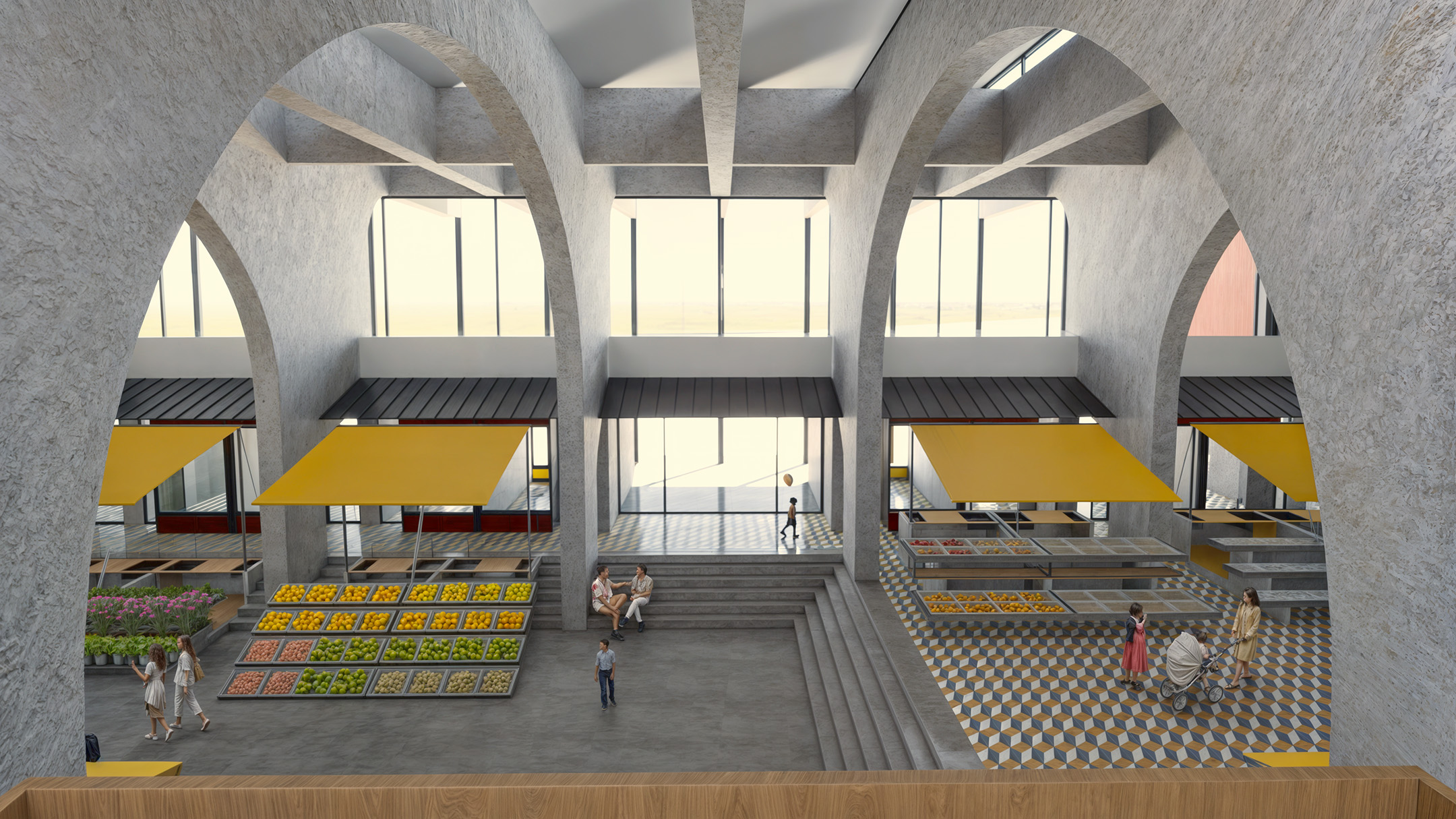
A “Praça” interior no cruzamento dos dois eixos de acesso pode funcionar como palco, sendo que os degraus que o envolvem em três dos seus lados podem ser utilizados como auditório. O balcão que marca as circulações verticais no piso superior pode, também, apresentar oportunidades diferentes para espetáculos de teatro, de música, recitação ou para oradores.
Ao mesmo tempo, esta praça pode ser utilizada como plateia, utilizando a zona de peixe como um palco elevado.
O desenho do módulo das bancas, removendo-se as caixas de aço inoxidável, produz duas bancadas frente a frente, podendo toda a nave central ser utilizada como um palco longitudinal (ou como, por exemplo, uma passarela).
As galerias superiores, desenhando uma circulação circular fechada, podem funcionar como espaço expositivo (potencialmente até de forma autónoma em relação às utilizações do espaço inferior).
Finalmente, o Mercado representa uma situação edificada de grande transparência e permeabilidade com seu contexto exterior, prolongando e qualificando o espaço público preexistente e o programa comercial limítrofe.
Although the overall design of the market was motivated by the best possible response to the fresh products market program, it was always kept in mind that this design should also accommodate other uses, with particular emphasis on cultural activities outside of open market hours.
Thus, many of the market’s elements serve a dual purpose and can be used independently or in combination for various effects.
The interior “Square” at the intersection of the two access axes can function as a stage, with the steps surrounding it on three sides serving as an auditorium. The counter marking the vertical circulation on the upper floor can also present different opportunities for theater performances, music, recitations, or speakers.
At the same time, this square can be used as an audience area, utilizing the fish section as an elevated stage.
The design of the stall module, by removing the stainless steel boxes, creates two opposing stands, allowing the entire central hall to be used as a longitudinal stage (or, for example, a catwalk).
The upper galleries, forming a closed circular circulation, can function as an exhibition space (potentially even autonomously from the uses of the lower space).
Finally, the market represents a built environment of great transparency and permeability with its exterior context, extending and enhancing the existing public space and the adjacent commercial program.
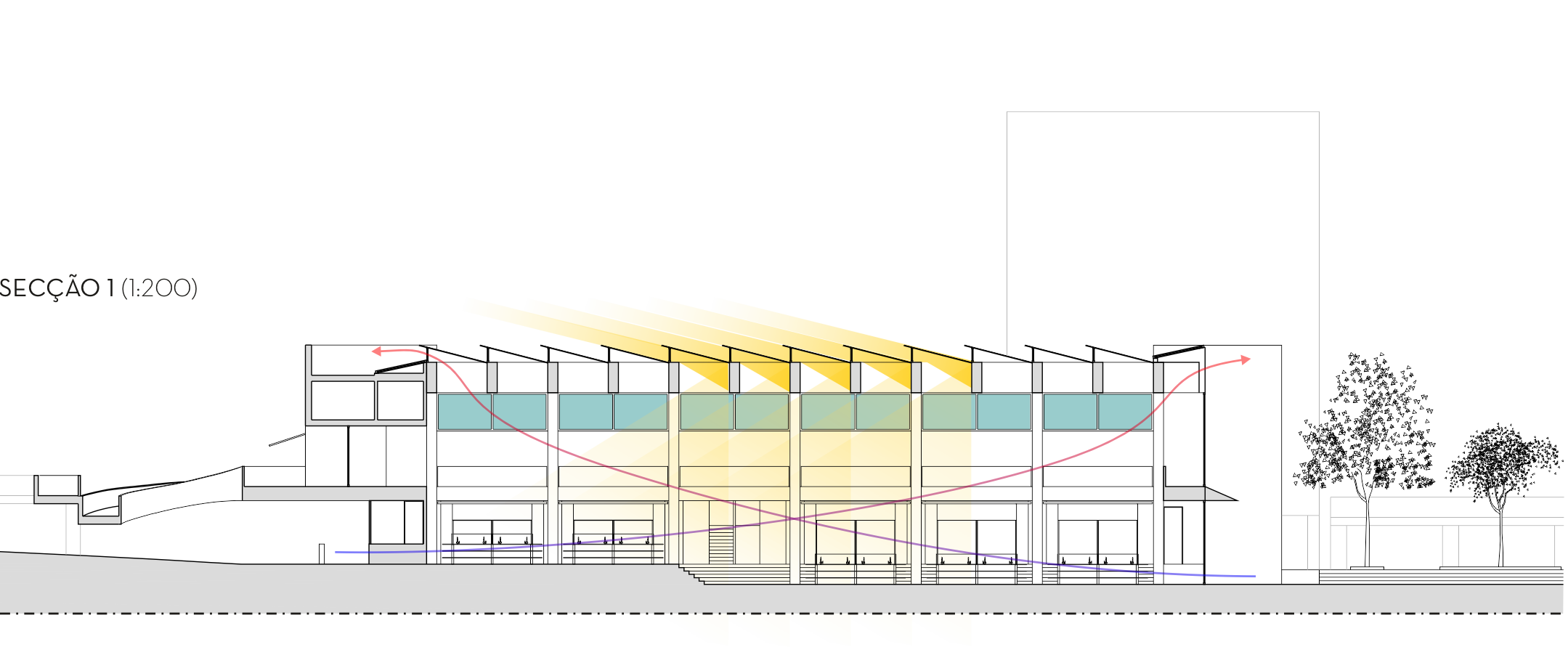
O pé-direito generoso proposto para a nave central permite um conforto térmico notável. No entanto, este pé-direito é complementando por uma circulação de ar passiva que tira partido dos ventos dominantes vindos do quadrante Norte para renovar e arrefecer o ar quando necessário.
A cobertura é compatível com o recurso a painéis solares, e é possível a recolha de águas pluviais para filtragem e posterior utilização, ou para rega e lavagem.
The proposed generous ceiling height for the central hall allows for remarkable thermal comfort. However, this ceiling height is complemented by passive airflow that takes advantage of the prevailing winds from the northern quadrant to refresh and cool the air when necessary.
The roof is compatible with the use of solar panels, and it is possible to collect rainwater for filtration and subsequent use, or for irrigation and cleaning.
A paleta de materiais é limitada, privilegiando solução correntes, aplicadas na sua apresentação natural, sem acabamentos subsequentes, de alta durabilidade e com baixos custos de manutenção.
The material palette is limited, favoring common solutions presented in their natural state, without subsequent finishes, ensuring high durability and low maintenance costs.
ARQUITETURA Tiago do Vale Arquitectos
EQUIPA DE PROJETO Tiago do Vale, Paula Campos, Nil Kokulu, Anabela Magro Couto
CONCURSO Mercado dos Olivais, Célula B
LOCALIZAÇÃO Olivais, Lisboa, Portugal
ORGANIZAÇÃO Lisboa Ocidental SRU
ANO DE PROJETO 2024
ÁREA DE CONSTRUÇÃO 2571 m2
ESTIMATIVA DE CUSTO 2 890 000 €
 Tiago do Vale Arquitectos