

Aurora 10 Building
Atelier Tiago do Vale





설계 아뜰리에 티아고 두 발레 수석 설계자 티아구 두 발레, 아드리아나 곤살베스, 파울라 캄포스, 클레멘티나 실바와 함께 위치 포르투갈 폰테 데 리마 건설 리오 술 L.다 건축면적 1,247㎡ 연면적 4,919㎡ 공학 엔지니어 에두아르다 올리베이라 사진 조앙 모르가도
오로라 10빌딩
교외 주택 개발의 설계는 일반적으로 상당한 규모의 도시적 도전이다. 이러한 레이아웃은 도시에 대한 포괄적인 전략적 의도에서 비롯되는 경우가 드물며, 도시의 정체성과 도시적 특성을 통합하거나 개선하는 능력을 제한한다. 이는 도시 성과와 삶의 질 측면에서 모두 해당된다.
그 결과 대부분의 경우 주변 환경과 관계를 구축하지 못하고 의미 있는 장소를 만들지 못하며 통합되고 성공적인 도시 지역에서 인식되는 구조화되고 유기적인 거리를 만들어내지 못하는 건물이 건설된다.
오로라10빌딩은 한편으로는 주변 지역의 특성과 필요성에 대응하고 기존의 시각적 정렬을 추구하고, 다른 한편으로는 연속성을 확립하고, 현재와 미래의 개입과 보다 풍부한 관계를 구축하고, 무엇보다도 공공 공간에 참여하고 설계하는 방식으로 플롯의 디자인을 재해석하여 이러한 유형의 개발의 한계 중 일부를 완화하는 것을 목표로 한다.
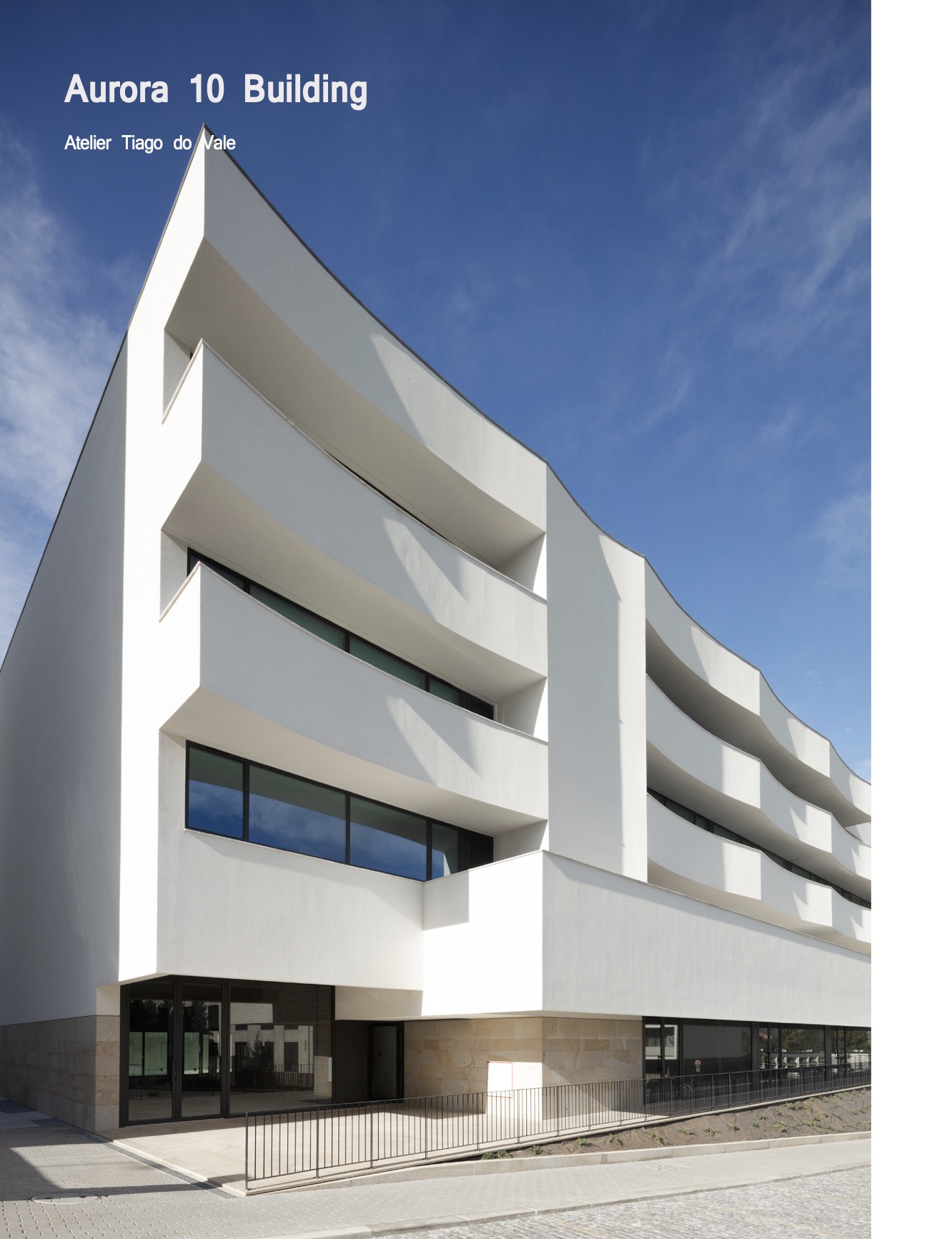
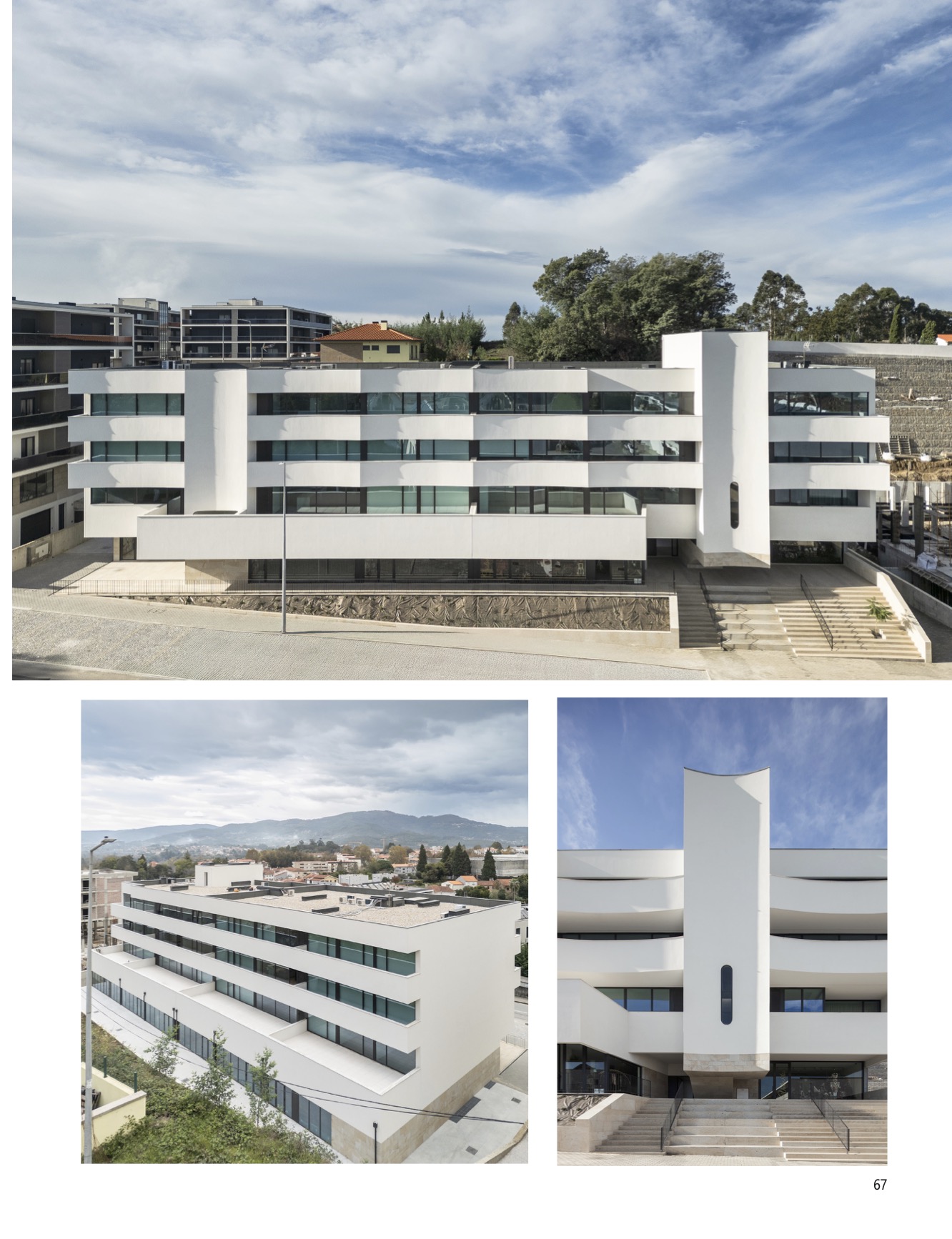
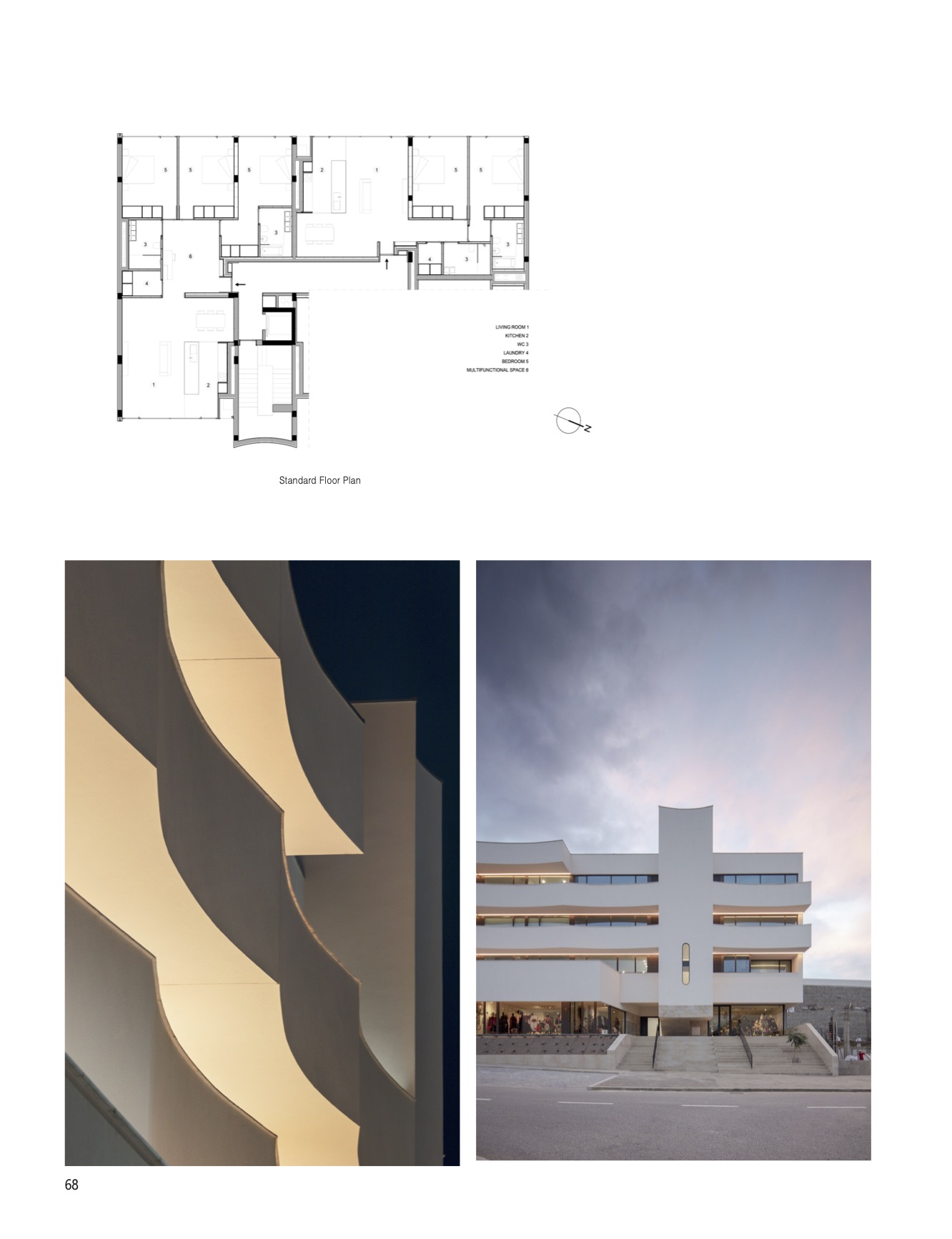
이 프로그램은 극도로 합리화된 디자인을 필요로 하지만, 주요 외관의 처리가 거리의 배경을 형성하는 빛과 그림자의 섬세한 놀이로 모놀리식 느낌을 깨고, 발코니의 추상적인 수평적 제스처를 동시에 방해하는 수직 패널을 제안한다. 이는 이 두 가지 형식적 장치 사이에 흥미로운 모순을 만들어내며, 이는 빛에 따라 변한다. 때로는 더 미묘하고 때로는 더 단호하다. 또한 통합된 도심의 조밀한 거리의 특징적인 수직적 리듬을 참조한다.
교외의 “공공 공간”은 일반적으로 분산된 건물 사이의 남은 지역으로 구성되었다. 이러한 상황은 자격을 갖춘 도시를 만들어내지 못했다.
결과적으로, 다기능 프로그램을 공공 및 사적 영역 사이의 전환 공간으로 확장하거나, 이러한 공유 공간을 평가하려 거리와 관련된 공공 영역과 플롯 내의 사적 공간 사이의 경계를 모호하게 하여 맥락을 인식하고 도시 공간에 적극적으로 참여할 수 있는 건물을 제안하는 것이 중요했다.
거리와 접한 보도는 덮인 상업 갤러리로 확장되며 계단과 강당으로 동시에 구성된 북쪽 접근 지점에서 절정에 달한다. 휴식과 모임을 위한 공간을 제공하며 시간이 지나면 자카란다 나무가 보호해 준다.
Architect Tiago do Vale Architecture Team Tiago do Vale, Adriana Gonçalves, with Paula Campos and Clementina Silva Location Ponte de Lima, Portugal Construction Rio Sul L.da Area 1,247㎡ Total floor area 4,919㎡ Engineering Engr. Eduarda Oliveira Photography Design João Morgado
Aurora 10 Building
Designing in suburban housing developments is, in general, an urbanistic challenge of considerable scale: their layouts rarely stem from overarching strategic intentions for the city, limiting its ability to consolidate its identity and urban characteristics or enhance them, both in terms of urban performance and the quality of life it provides.
The result is, in most cases, the construction of buildings that do not establish relationships with their surroundings, fail to create meaningful places and do not produce the structured, organic streets we recognise in consolidated and successful urban areas.
The Aurora 10 Building aims to mitigate some of the limitations of this type of development by reinterpreting the design of the plot in such a way that, on one hand, responds to the characteristics of the surrounding area and its needs, seeking existing visual alignments, and, on the other hand, paves the way for the establishment of continuities, richer relationships with present and future interventions, and, above all, participates in and designs public space.
Although the programme requires an extremely rationalised design, the treatment of the main façade breaks the monolithic feel with a delicate play of light and shadow that forms the backdrop to the street, suggesting vertical panels that simultaneously disrupt the abstract horizontal gesture of the balconies -creating an intriguing contradiction between these two formal devices, which changes with the light: sometimes more subtle, other times more assertive- while also referencing the vertical rhythms characteristic of the dense streets of consolidated city centres.
The “public space” of the suburbs has generally consisted of the leftover areas between scattered buildings: a situation that has not produced qualified city.
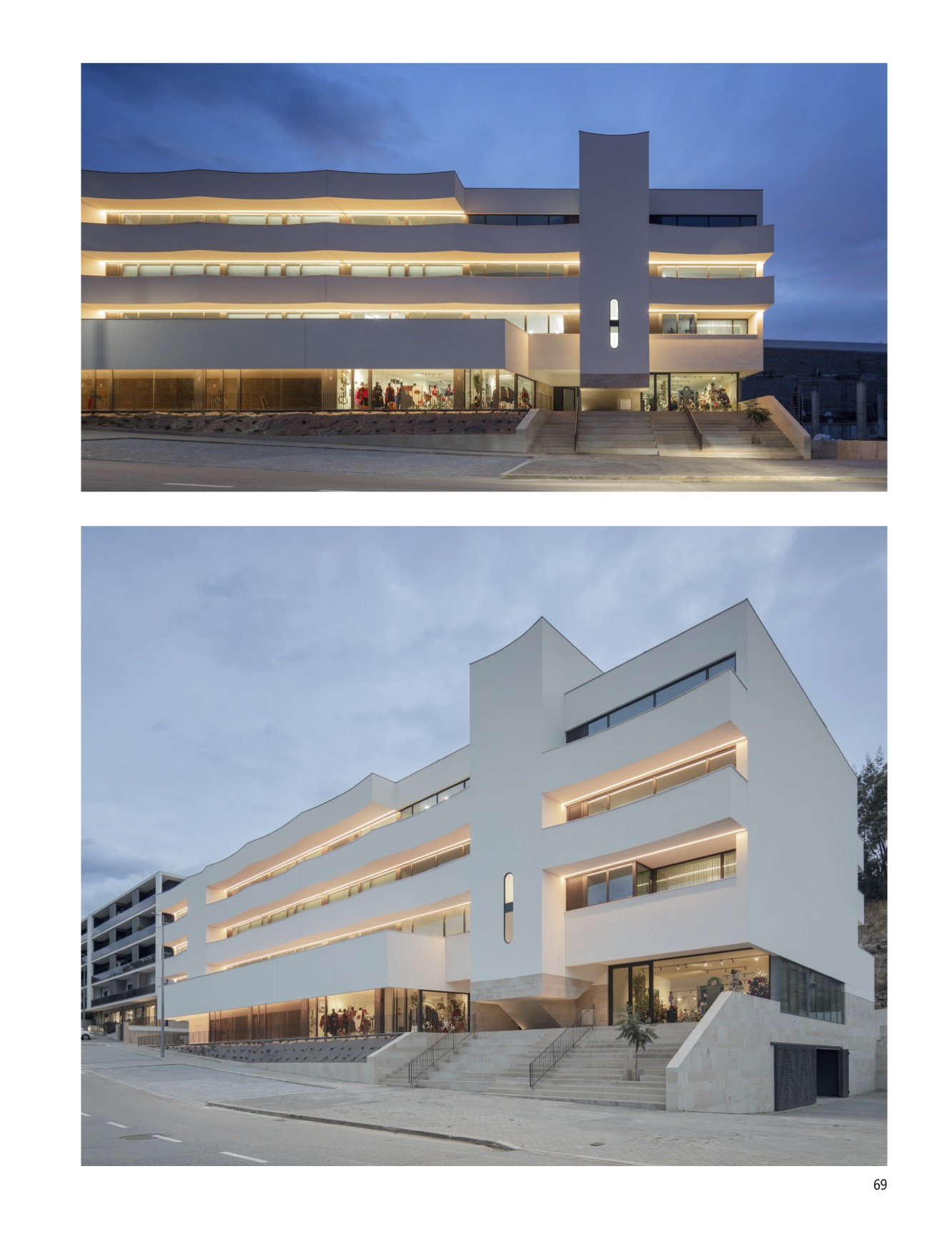
As a result, it was crucial to propose a building aware of its context and capable of actively participating in the urban space, either by extending its multifunctional programme into the transitional spaces between public and private domains, or by valuating those shared spaces, blurring the boundaries between the public realm associated with the street and the private space within the plot.
The sidewalks that border the street extend into a covered commercial gallery, culminating in a northern access point configured simultaneously both as stairs and an auditorium, providing a space for rest and gathering, which a Jacaranda tree will shelter in time.
 Tiago do Vale Arquitectos